

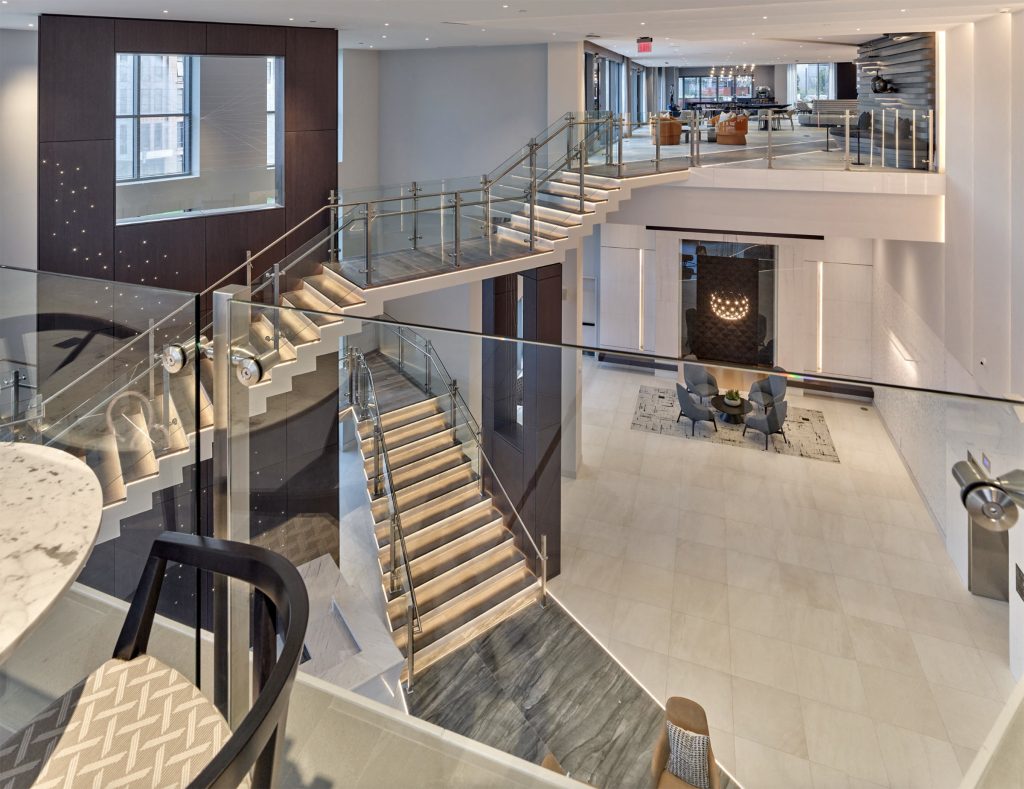
The conventional development process has long followed a linear structure in which architecture establishes the framework and interiors are introduced to shape the experience within it. While this model provides a clear sequence of execution, it does not fully reflect how buildings are actually experienced by those who live within them.
Residents do not engage with architecture in abstraction. Their experience is shaped by movement, interaction, and routine, all of which are defined by interior conditions. Every decision related to scale, circulation, and adjacency influences how a space is used and perceived daily.
As expectations around residential environments continue to evolve, this reality is prompting a reconsideration of how design decisions are made. At CDG, we have long advocated for an interior-led approach in which the lived experience informs the architectural framework from the outset. This is not a stylistic preference, but a strategic one.
When interiors lead, the building begins to organize itself around behavior. Circulation aligns with natural movement patterns, reducing friction and improving usability. Sightlines are shaped by moments of experience rather than formal composition. Amenity spaces become integrated into the identity of the building, rather than existing as separate components.

The outcome is a more cohesive environment, one that feels intuitive because it has been designed with use in mind. Research consistently shows that residents are more likely to engage with spaces that align with their daily routines, and that engagement contributes directly to satisfaction and retention.

From a development perspective, the benefits are equally clear. Projects that prioritize interior strategy early in the process tend to achieve stronger leasing performance and require fewer adjustments after completion. Conversely, when interior considerations are introduced too late, the resulting inefficiencies can impact both cost and timeline.

This approach requires collaboration across disciplines, with architects, designers, and developers working in alignment from the earliest stages of a project. While this may introduce additional complexity in the process, it ultimately produces a more refined and effective result.
Because when interiors lead, buildings are not only more cohesive. They are more responsive, more functional, and ultimately more valuable.