

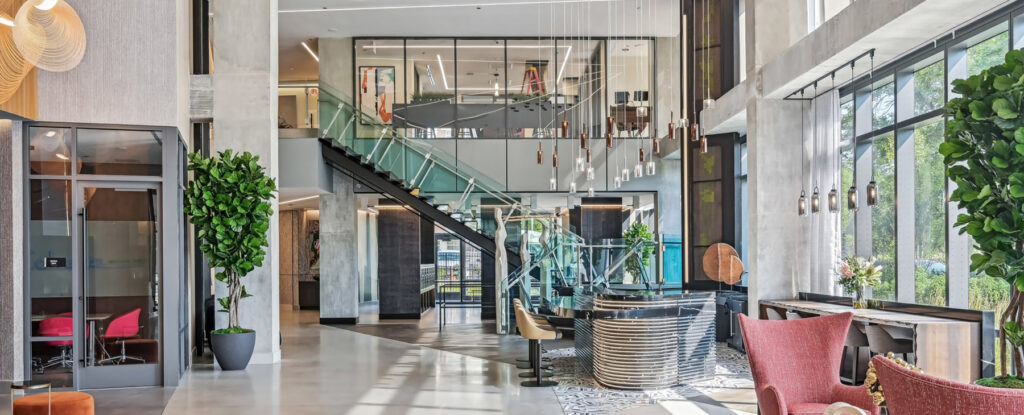
Design is often judged by how a space looks. But its real value is felt in how a space helps people live.
The places we move through every day influence our routines, mood, focus, comfort, and sense of belonging. A well-designed home can make mornings feel smoother. A thoughtfully planned lobby can make coming home feel calmer. A comfortable lounge can turn neighbors into familiar faces. A quiet workspace can help residents separate work from rest.
These details matter because residential design is not experienced once. It is experienced every day.
CDG’s project language speaks directly to this idea, noting that today’s residents are knowledgeable, savvy, sophisticated, and looking for thoughtful amenities, meaningful community space, and multi-purpose living areas. That is where design becomes more than aesthetics. It becomes a framework for daily life. Design impacts life by reducing friction.
When circulation is clear, people move more easily. When seating is placed with care, people feel invited to use a space. When lighting supports both energy and comfort, rooms become more flexible. When amenities are located where residents naturally pass through, they become part of the routine instead of occasional destinations. This applies across every housing category.
In affordable housing, design can support dignity and pride. In luxury housing, it can create ease and refinement. In student housing, it can shape study, social life, and independence. In mixed-use developments, it can connect home to neighborhood. In active adult communities, it can support wellness, confidence, and connection.
Location also changes the design response. In Chicago, design may need to create warmth and comfort through long winters. In Florida, it may prioritize indoor-outdoor living, shade, and wellness. In New York and New Jersey, it may need to make compact spaces feel generous and highly functional. In university markets, it may need to respond to campus culture, study patterns, and social energy.
The most successful spaces are not generic. They understand who lives there and where they live.
There is also a growing business case for designing around wellbeing. The Global Wellness Institute defines wellness real estate as built environments designed and operated to support the holistic health of occupants, visitors, and the community. The sector reached $876 billion in 2025 and is projected to reach $1.8 trillion by 2030.
That growth reflects something CDG has long understood people expect more from the places they live.
They are not only choosing square footage. They are choosing a lifestyle, a community, a daily experience, and a feeling of home.
Design cannot solve every challenge, but it can make life better in quiet, consistent ways. It can support connection. It can create calm. It can encourage movement. It can make shared spaces feel natural and personal. It can help a property feel cared for and help residents feel cared for in return.
The best spaces do more than look good. They help people live better.
Learn More about CDG: https://www.childsdreyfus.com/cdg-projects
Contact us: https://www.childsdreyfus.com/contact