

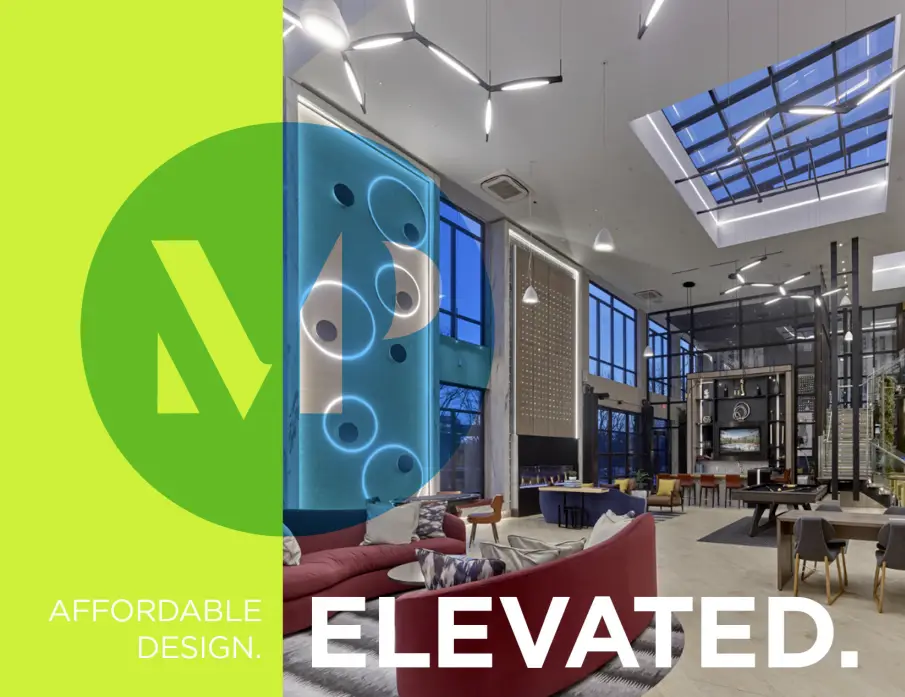
Across the country, demand continues to outpace supply, development costs remain under pressure, and communities are looking for more attainable living options. At the same time, owners and developers must create properties that are financially viable, operationally efficient, competitive, and built to perform for the long term.
That makes affordable living more than a response to market need.
It makes it a business strategy.
At The Childs Dreyfus Group (CDG), this thinking is central to MarketPlace, our division focused on affordable living and Entry-Level Market Rate communities.
MarketPlace is grounded in a straightforward idea: budget discipline and thoughtful design should not be competing priorities. In fact, when design decisions are made strategically, they can work together to create better resident experiences while supporting the long-term performance of an asset.
See projects here: https://www.childsdreyfus.com/cdg-projects
The question, then, is not simply how to develop within an affordable budget.
The more important question is how to create affordable living that performs.
Design Has a Role in Asset Performance
In any development, budgets matter. In MarketPlace communities, every dollar often has to work harder.
That makes it especially important to understand where design investment can have the greatest impact.
Design should not be treated as an added expense at the end of the development process. When considered early, it can help inform decisions about space planning, materials, furnishings, durability, maintenance, and operations.
A well-planned lobby, for example, can create a stronger first impression without requiring excessive square footage or costly finishes. A flexible community room can support multiple resident needs rather than dedicating separate spaces to individual functions. Durable materials can help reduce replacement cycles and maintenance demands. Thoughtful lighting and furniture planning can make a relatively simple space feel welcoming, intentional, and complete.
None of these decisions requires excess. They require strategy. And that distinction matters.
The Best Spaces Work Harder
One of the most important principles behind MarketPlace is making every space work harder.
When budgets are carefully managed, successful design is not about adding more. It is about getting more value from what is already there.
- Can one amenity space support several functions throughout the day?
- Can furniture arrangements provide both social interaction and individual use?
- Can a material deliver the right aesthetic while also standing up to years of resident traffic?
- Can lighting make a space feel more welcoming while remaining efficient and straightforward to maintain?
- Can a design decision improve the resident experience today while reducing operational pressure tomorrow?
These are design questions, but they are also business questions.
For owners and developers, the goal is to identify the decisions that contribute most directly to resident experience, property performance, and long-term value.
Resident Experience and Asset Value Are Connected
There can be a tendency to separate resident experience from financial performance. In practice, the two are closely connected.
Residents notice when a community feels cared for.
They notice comfortable shared spaces, intuitive layouts, good lighting, durable finishes, and environments that feel considered rather than simply completed.
That experience can influence how residents feel about where they live and how connected they become to their community.
For the property, that connection can have meaningful implications.
Resident satisfaction can support retention. Retention can help reduce turnover costs. Durable materials can reduce maintenance and replacement pressure. Functional amenity spaces can create perceived value without introducing unnecessary operational complexity.
Good design does not have to mean expensive design.
Often, the most effective solution is the one that balances experience, durability, cost, and performance from the beginning.
That is particularly important for affordable living, where development and operating budgets demand discipline but resident expectations for quality, comfort, and community remain very real.
Designing for Long-Term Relevance Learn More:
Another consideration deserves attention: how a property will age.
A community is not designed only for opening day. It needs to work five, ten, and fifteen years later.
That requires thinking beyond immediate aesthetics and considering how materials will wear, how amenity spaces may evolve, how residents will actually use shared environments, and how easily a property can be maintained or refreshed over time.
For MarketPlace, longevity is part of the design conversation from the beginning.
That may mean avoiding overly trend-driven decisions. It may mean investing in a more durable material in a high-traffic location while finding savings elsewhere. It may mean creating flexible spaces that can adapt as resident needs change.
The objective is not to make every decision based on the lowest initial cost.
It is to make smarter decisions about where the budget creates lasting value.
A Growing Opportunity for Developers
This approach is becoming increasingly relevant in markets across the country.
From Chicago, New York, Boston, Miami, and Los Angeles to rapidly growing Sun Belt cities, developers are navigating a similar challenge: how to deliver attainable living options while managing rising costs, changing expectations, and long-term asset performance.
These communities do not exist in isolation. They become part of neighborhoods, influence the resident experience, and contribute to how a larger development or area is perceived.
That means the quality of the environment matters.
For residents, thoughtful design can create comfort, dignity, belonging, and a stronger sense of home.
For developers and owners, those same decisions can support durability, operational efficiency, marketability, and asset value.
MarketPlace is where those priorities come together.
Affordable Living Without Compromise
Affordable living does not require excess. But it should require intention.
It requires knowing which spaces matter most. Which materials will perform. Which amenities residents will actually use. Where investment will have an impact. And where unnecessary complexity can be removed without diminishing the experience.
That is the opportunity we see with MarketPlace. It is not about designing less. It is about designing more intelligently.
When affordability, design, operations, and resident experience are considered together, the result can be a community that works harder for everyone involved.
Residents gain a place that feels thoughtful, comfortable, and genuinely like home.
Owners and developers gain an asset designed with durability, efficiency, and long-term performance in mind.
And communities gain developments positioned to remain relevant and valuable over time.
At The Childs Dreyfus Group, that is how we think about MarketPlace—and why we believe affordable living deserves the same strategic thinking we bring to every other segment of the multifamily market.
Because ultimately, affordable living is not simply about what it costs to create a community.
It is about how intelligently we create value and how long that value lasts.
Learn More: https://www.childsdreyfus.com/cdg-projects/marketplace/